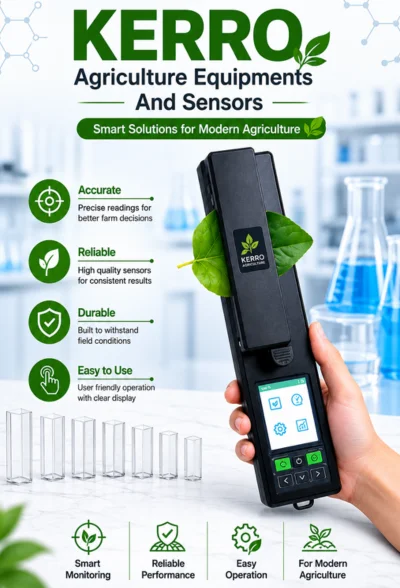
Modern farming is no longer only about tractors, seeds and irrigation. Farmers today need timely information about their soil, crops and field conditions to make better decisions. The right Smart Farming Equipment can help reduce unnecessary water use, improve crop monitoring and support better farm management. However, choosing the right equipment can feel confusing when different sensors and technologies are available in the market. The best choice depends on your crop type, farm size, soil conditions and the specific problem you want to solve.
For example, a farmer facing repeated water wastage may benefit more from soil moisture monitoring than from investing in equipment that does not address the actual issue. This is why selecting technology based on real farming needs is more important than simply choosing the latest product. The right combination of agriculture equipment and sensors can provide useful field data and help farmers take practical decisions at the right time.
Start by Understanding Your Farming Requirements
Before investing in new technology, identify the challenges on your farm. Every agricultural operation has different requirements. A small greenhouse may need temperature and humidity monitoring, while a large agricultural field may require soil monitoring and crop observation tools.
Ask yourself a few practical questions:
- What crops are you growing?
- What is the size of your farm?
- Are you facing water management problems?
- Do you need to monitor soil conditions?
- Are temperature and humidity affecting your crops?
- Do you want better control over irrigation?
- Do you need regular field data for decision-making?
These answers can help you choose suitable Agricultural Equipment for Smart Farming instead of spending money on unnecessary technology.
A good smart farming setup should solve a specific problem. Technology should make farming easier and more manageable rather than adding another complicated process to your daily work.
Understand the Role of Precision Farming Equipment
Precision Farming Equipment helps farmers manage agricultural activities using real information from the field. Instead of relying completely on assumptions, farmers can monitor important conditions and respond according to actual requirements.
For instance, soil conditions can vary across different parts of the same farm. One area may require irrigation while another area already has enough moisture. Using appropriate monitoring equipment can help identify these differences and support better water management.
Precision farming can support activities such as:
- Monitoring soil conditions
- Managing irrigation
- Tracking temperature and humidity
- Observing crop conditions
- Reducing unnecessary resource use
- Improving farm planning
The goal is not to replace farming experience. Instead, technology works alongside the farmer's knowledge by providing additional information that can support better decisions.
When selecting equipment, always focus on practical usefulness. A simple and reliable monitoring solution that your team can use regularly may be more valuable than a complicated system with features you never need.
Choose Sensors Based on What You Need to Monitor
Sensors play an important role in smart agriculture because they collect information directly from the farming environment. However, different sensors serve different purposes.
Soil Moisture Sensors
Soil moisture sensors help monitor the amount of moisture present in the soil. This information can support irrigation planning and help farmers avoid unnecessary watering.
For example, instead of watering a field according to a fixed schedule, a farmer can check whether the soil actually needs water. This approach can be especially useful where water availability is limited.
Temperature Sensors
Temperature can directly affect crop growth and farming conditions. Temperature monitoring can be useful in greenhouses, storage areas and controlled farming environments.
By tracking temperature changes, farmers can respond before unsuitable conditions create larger problems.
Humidity Sensors
Humidity monitoring is important for many agricultural environments. Excessive or insufficient humidity can affect crops and growing conditions.
These sensors can help farmers understand environmental changes and take suitable action when required.
Soil Condition Monitoring Sensors
Different soil conditions influence crop growth. Monitoring tools can help farmers understand important factors affecting their fields and make better decisions about farming practices.
The Best Sensors for Precision Agriculture are not necessarily the most expensive ones. The best sensors are those that provide useful and reliable information for your specific agricultural requirements.
Consider Your Farm Size Before Selecting Equipment
Farm size should play an important role in your purchasing decision. A small farm may not require the same setup as a large commercial agricultural operation.
For smaller farms, portable and easy-to-use equipment may provide sufficient information. Large farms may require multiple monitoring points because soil and environmental conditions can change across different areas.
A large farm with only one monitoring point may not always receive a complete picture of field conditions. On the other hand, installing too many devices on a small farm can increase costs without providing additional value.
The best approach is to select equipment according to the area you want to monitor and the level of information you actually need.
Focus on Accuracy and Reliability
Agricultural decisions based on incorrect information can create problems instead of solving them. This makes reliability an important factor when selecting farming sensors and equipment.
Look for equipment that offers:
- Consistent performance
- Easy operation
- Clear readings
- Suitable measurement range
- Durable construction
- Reliable monitoring
- Simple maintenance
A sensor should be practical enough for regular agricultural use. Farming environments can involve dust, moisture, changing temperatures and outdoor conditions. Therefore, the equipment should suit the environment where you plan to use it.
It is also important to understand how the equipment should be maintained. Even good monitoring equipment requires proper handling and regular checking to deliver useful results over time.
Make Sure the Equipment Is Easy to Use
Technology only creates value when people can use it properly. Complex equipment may look impressive, but if farmers or farm workers struggle to operate it, the system may not deliver the expected benefits.
Choose equipment with simple operation and clear information. The people using the equipment should understand:
- What the readings mean
- When readings should be checked
- How often monitoring is required
- What action should be taken based on the information
For example, knowing that soil moisture is low is useful. However, the real value comes when that information helps the farmer decide whether irrigation is required.
Good smart farming technology should support practical decision-making rather than simply generating large amounts of data.
Think About Long-Term Value Instead of Only Price
Price is naturally an important consideration, but choosing the cheapest equipment may not always provide the best value.
A low-cost sensor that produces unreliable readings or requires frequent replacement can become more expensive over time. Similarly, expensive equipment with unnecessary features may not be suitable for your farming operation.
Consider factors such as:
- Product quality
- Expected usage
- Maintenance requirements
- Reliability
- Ease of operation
- Supplier support
- Long-term usability
The right investment should balance cost and practical performance.
When evaluating Grain Moisture Meter Equipment, think about the problem it solves and the value it can provide over time. A useful monitoring solution can help improve resource management and support more informed agricultural decisions.
Understand the Importance of Agricultural Monitoring
Regular monitoring helps farmers understand what is happening in their fields instead of waiting until a visible problem appears.
Agricultural Monitoring Sensors can support farmers by providing information about changing field and environmental conditions. This can be useful for planning irrigation, monitoring growing environments and identifying changes that require attention.
For example, imagine two farmers growing the same crop. One farmer checks soil and environmental conditions regularly, while the other relies only on fixed schedules and visual observation. The first farmer may receive useful information earlier and can make decisions based on actual conditions.
This does not mean technology guarantees perfect results. Agriculture depends on many factors including weather, crop type and farming practices. However, accurate information can help farmers make more informed decisions.
Check Compatibility With Your Existing Farming Setup
Before purchasing new equipment, consider how it will fit into your current farming process.
Ask questions such as:
- Can the equipment work with your existing irrigation system?
- Is it suitable for your crop type?
- Can your team operate it easily?
- Does it require special installation?
- Will you need additional equipment?
Choosing compatible equipment can make implementation easier and reduce unnecessary costs.
A smart farming system should support your existing operations and improve efficiency step by step. There is no need to change everything at once.
Many farms can begin with one important monitoring requirement and expand later according to their experience and needs.
Choose a Reliable Supplier or Manufacturer
The company you choose can be just as important as the equipment itself. A reliable supplier should understand the practical requirements of agricultural users and provide suitable product guidance.
Before choosing a supplier, consider:
- Product quality
- Available product options
- Technical knowledge
- Customer support
- Product information
- Experience in the industry
A good supplier should help customers understand which solution suits their requirements rather than simply recommending the most expensive product.
This is particularly important for businesses, agricultural institutions, research organisations and commercial farms that require equipment for regular use.
A Practical Approach to Building Your Smart Farming Setup
You do not need to invest in every available technology at once. A practical approach is to begin with the problem that affects your farm the most.
If irrigation management is your biggest concern, start with suitable soil monitoring. If you operate a greenhouse, temperature and humidity monitoring may be more important.
As your requirements grow, you can add more Precision Farming Equipment to create a stronger monitoring system.
This step-by-step approach helps you understand how technology works on your own farm and prevents unnecessary investment.
Why the Right Equipment Makes a Difference
Smart agriculture is most effective when technology solves real problems. The right sensors and equipment can help farmers understand their fields better, manage resources more carefully and make decisions based on useful information.
However, equipment alone cannot guarantee better farming results. Proper use, regular monitoring and practical agricultural knowledge remain equally important.
The best solution combines farming experience with reliable technology.
Final Thoughts
Choosing the right agriculture equipment and sensors starts with understanding your actual farming requirements. Instead of purchasing technology simply because it is popular, focus on the challenges you want to solve.
Consider your crop type, farm size, monitoring requirements and daily operations before selecting equipment. Choose reliable and easy-to-use solutions that provide information you can actually use.
Whether you manage a small farm, a commercial agricultural operation, a greenhouse or a research facility, the right Hollow Cathode Lamp can support better planning and more informed decisions.
If you are looking for suitable agriculture equipment and monitoring solutions, explore products based on your specific requirements and choose equipment that delivers practical value for your farming operations. The right technology should make your work easier, help you understand your farm better and support smarter decisions for the future.